
Update: Acts of Translation
New book, forthcoming book, and a model for the comprehensive edition!
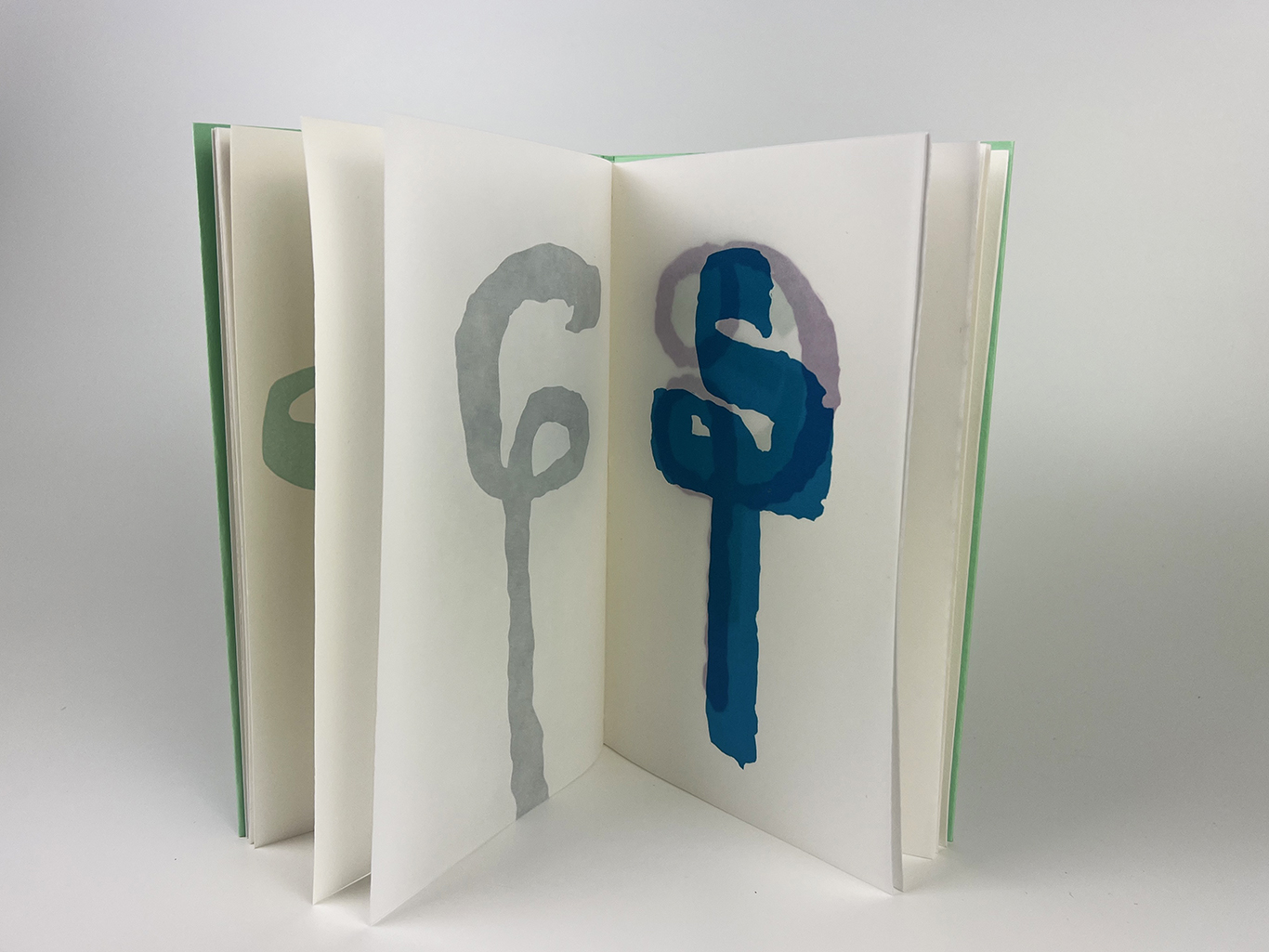
For the last two years I have been working on one project, a series of books titled Acts of Translation. I am working with each of five collaborators individually to design and produce an artist book about their experience through interviews, studio visits, and a collection of shared imagery. We are examining an act of translation, broadly defined for the purposes of this project as “the conversion and communication of information,” and interpreting that act through the combination of text, image, material choices, and book structure. I am issuing these books individually, but reserving part of the edition to release them as a bound set in a specially designed binding. Each of the books in this series effectively captures two acts of translation: first, the particular act of conversion and communication performed by individual at the heart of the book; second, my work as an artist to represent their act through the combination of text, image, material, and structure. This project seeks to highlight our shared experience, even when what we have in common is the difficulty inherent in communicating across divides.
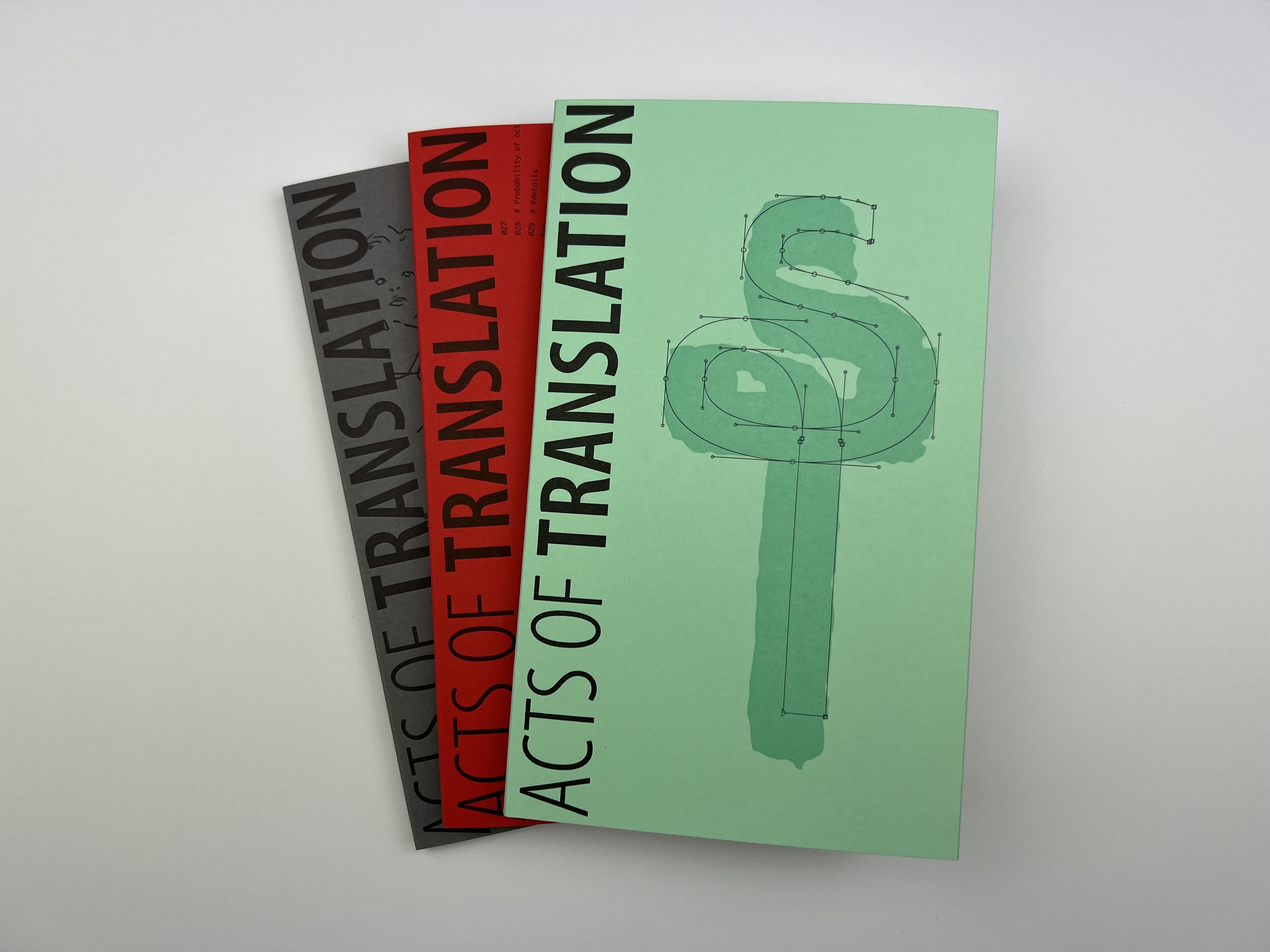
Acts of Translation: Ben Mitchell is the third in a series of collaborative books from Big Jump Press devoted to translation and communication. Ben Mitchell is a UK-based type designer and the founding director of The Fontpad Ltd. He has been visiting Southeast Asia since the 1990s, and lived in Thailand from 2002 to 2006. With a long-held interest in visual communication and especially different writing systems, he has become one of the foremost researchers of Southeast Asian scripts. He has designed and consulted on fonts for Burmese, Buginese, Chak, Cham, Khmer, Kwekor (Myainggyingu), Lao, New Tai Lue, Tai Phake, Thai, Tham and Vietnamese, and regularly makes research trips to Southeast Asia to study typography, lettering and handwriting, which help inform his professional practice.

For this iteration of the Acts of Translation project, Ben and I spoke about his tactics for developing an understanding of the range of acceptable forms as he designs each character. Imagery for this book comes from Ben’s photographs of Burmese letterforms. He travels widely to find examples in manuscripts, temple inscriptions, impressions from lead type, and painted signs. I traced examples of the Burmese letter Na, carved them in linoleum, and printed them on translucent paper. Text for this project was gathered, edited, and recombined from a series of recorded interviews conducted in 2022.

Like other components of the Acts of Translation project, this book has been produced in an edition of 66, of which 26 copies are lettered a through z and bound individually and 40 copies will be bound in a comprehensive edition that I hope to release in early 2024. The lettered edition is available for $200. Proceeds from the sale of the lettered edition of this book will be donated to Health&HopeUK, a charity working with vulnerable rural communities in Myanmar (Burma), particularly in and around Chin State. Learn more at healthandhope.org. Papers for this book include Zerkall Book, Clearprint Design Vellum, and Colorplan. The text has been digitally set in Arno, a typeface designed by Robert Slimbach, and Sanomat Burmese, designed by Ben Mitchell, and printed letterpress from polymer plates.
9×12″ prints are also available of layered images from the edition for $50. Proceeds from the prints will fund continued work on the Acts of Translation Project.

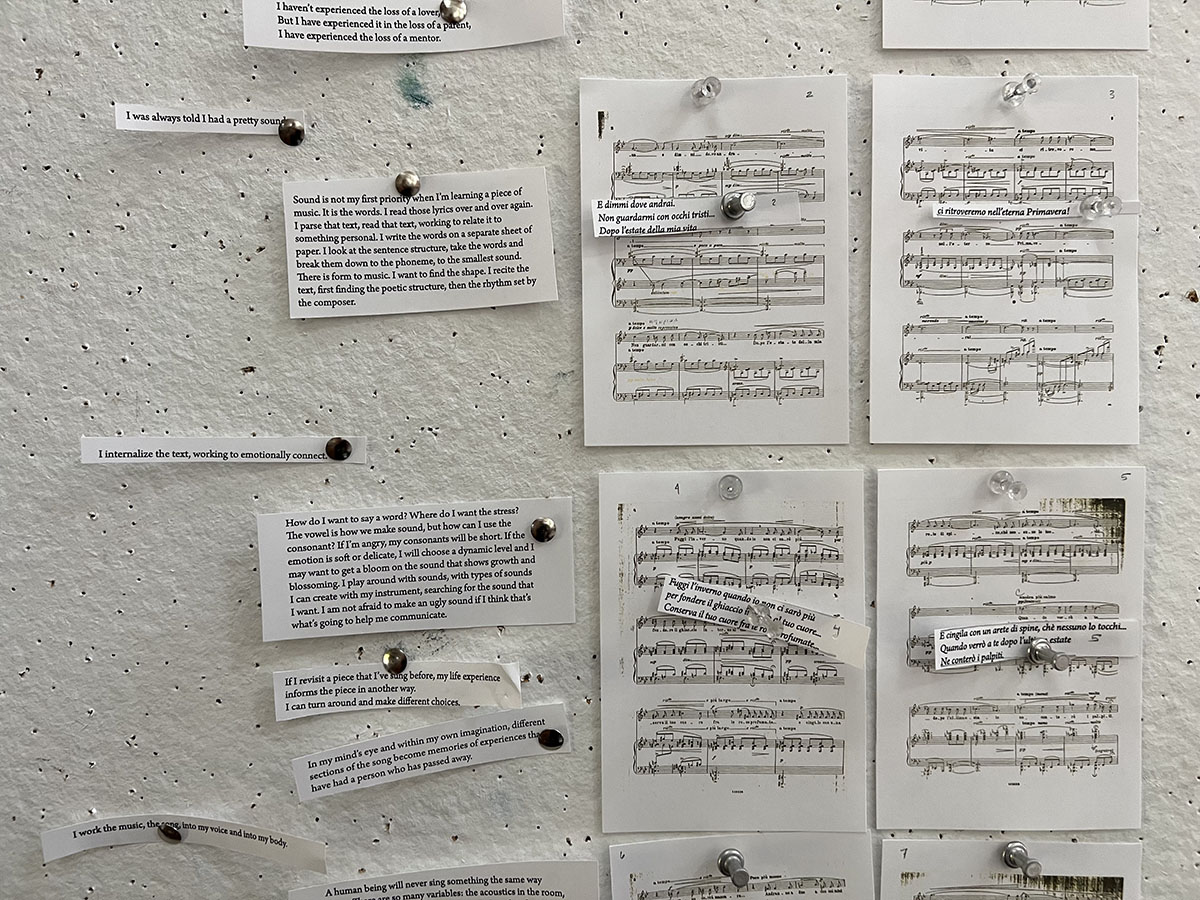
I recently spent two glorious weeks at InCahoots Residency, where I began designing the next component for this project. For the fourth book in the series, I am working with Dr. Luvada A. Harrison, a soprano performer and fellow professor here at The University of Alabama. We are focusing on her transformation of a document, a musical score, into the communication of emotion to an audience.
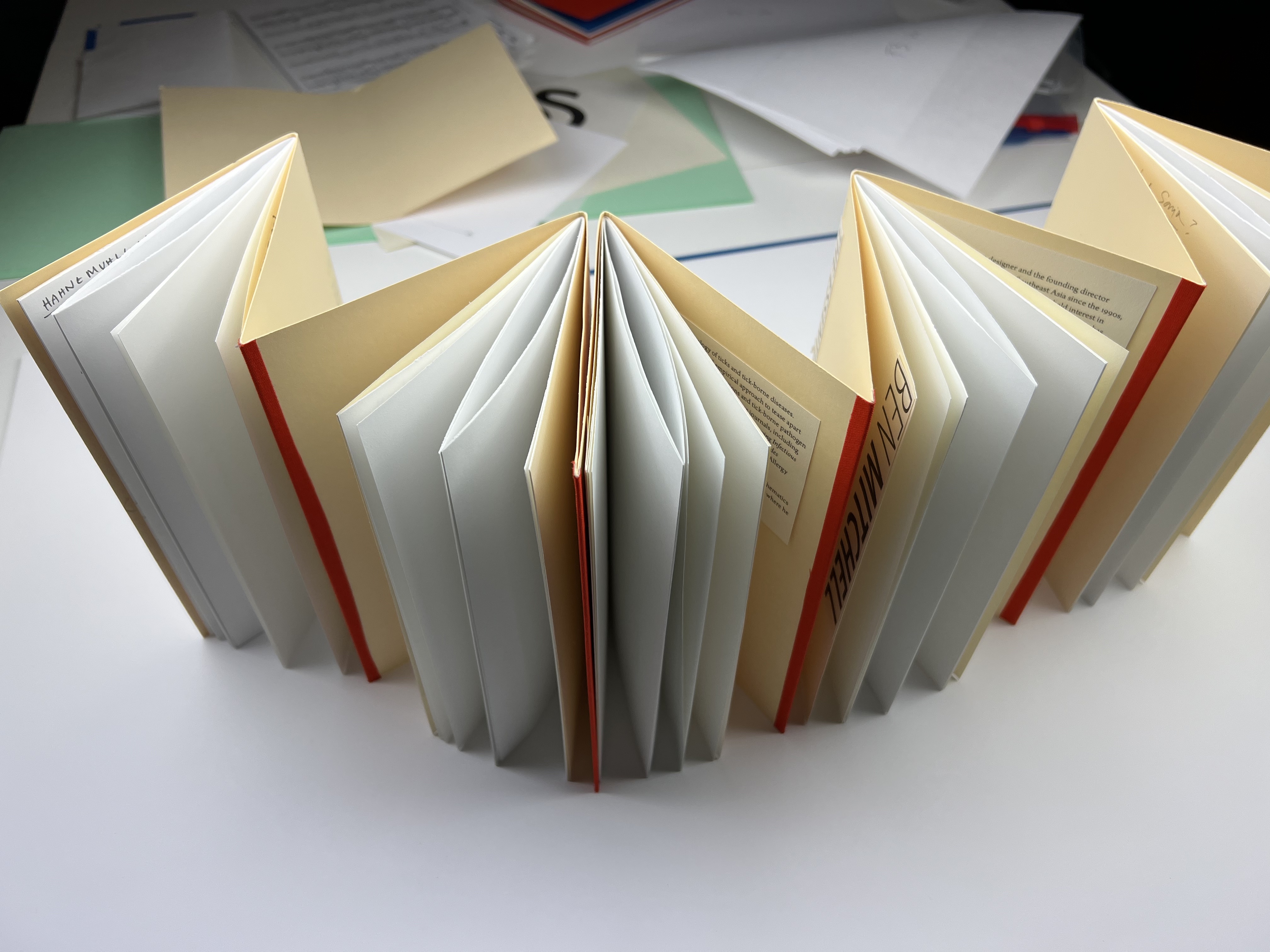
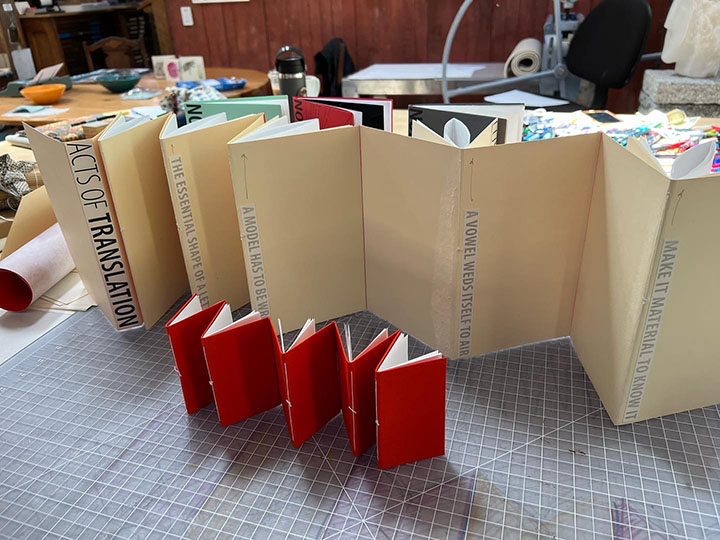
Process images, and some mockups for the final comprehensive edition, are below. Stay tuned as the project develops! I am deeply grateful to the Collaborative Arts Research Initiative at The University of Alabama for their support for this project.


 Big Jump Press